May 27, 2009

Siri Lifts Veil on Intelligent Assistant Industry

Posted: 05/27/2009

By Elise Ackerman


One of the most significant advances in artificial intelligence in a decade could soon be coming to an iPhone near you.


Dag Kittlaus, chief executive of Siri, a company that emerges from stealth mode this morning, demonstrates. "Siri, I want to see Star Trek," he tells his iPhone.


Within milliseconds, the phone displays a result that shows a nearby theater where the movie is playing. If Kittlaus wanted, he could click on the result and Siri would buy the ticket for him. Or he could ask Siri, a Scandinavian girl's name that means "beautiful victory," to find a theater closer to his home in south San Jose.


Siri can also book restaurants and airline flights, buy just about anything the Internet has to offer, reschedule appointments on the fly and answer trivia questions like,


"How many calories are in a banana?"


"The future of search isn't search," said Kittlaus. "It is a conversation with someone you trust."


Experts in artificial intelligence, or AI, say Siri will either be the first "intelligent agent" that responds to natural language — or the most recent failure in a series of spectacularly unsuccessful attempts to write software code that replicates some basic functions of the human brain.


Precursors to Siri included Apple's "Knowledge Navigator," touted by then Chief Executive John Sculley in 1987, and a project Microsoft dubbed "Hailstorm," which got canceled before it was launched.


"I am skeptical of anything t hat uses the word intelligent to describe itself," said Charles Petrie, a senior research scientist at Stanford University's Computer Science Department and a member of Stanford's renowned artificial intelligence lab.


Skepticism was also the initial reaction of Tom Gruber, a computer scientist who began working on AI-related projects in the early 1980s. After two decades of research, Gruber was all too aware of the limitations of machines.


But within five minutes Gruber realized that Kittlaus and his co-founder, Adam Cheyer, had cracked open "the grand opportunity." Gruber immediately signed on as chief technology officer.


What impressed him so much was Siri's ability to offer a consumer product built on breakthroughs in machine learning — computer systems that learn from experience and natural language processing and something geeks call the programmable Web software code that let Web sites share their data.


Siri could use the code, also known as APIs or application programming interfaces, to search for the cheapest flight to Denver on a site like Kayak.com and then add it to a Yahoo calendar. Or it could scan AllMenus.com and Yelp to find if there was a popular sushi place within four blocks.


Siri's abilities are well beyond those of Google and the other major search engines, who are still primarily content-indexing systems, Gruber said.


Siri is not the first company to realize that knitting APIs together might be useful. Rearden Commerce, of Foster City, already offers a Web-based personal assistant for business customers that can book travel, coordinate schedules, control costs and more.


But Norman Winarsky, a member of Siri's board of directors, said Siri is much more than just an integrator of Web services. Indeed, it's the culmination of one of the government's largest artificial-intelligence projects.


In 2003, the Pentagon's Defense Advanced Research Projects Agency, which is most famous for sponsoring the research that led to the development of the Internet, awarded SRI International the first of several grants to develop CALO, a Cognitive Agent that Learns and Observes.


Over the next five years, Darpa invested $150 million in the project, said Winarsky, who is a vice president at SRI International. Hundreds of computer scientists and nearly three dozen universities and corporate research centers worked on parts of the CALO problem.


"I think we are going to surprise a lot of people with what's possible now," Kittlaus said. Kittlaus was an entrepreneur-in-residence at SRI International when he co-founded Siri in December 2007 with Adam Cheyer, the chief architect of CALO, and Gruber.


A former executive at Motorola and Telenor Mobile, the Scandinavian telecom giant, Kittlaus imagined putting Siri's intelligence on the iPhone from the start. "The iPhone singlehandedly changed mobile," he said. People were ready to do all kinds of new things with their phone, provided it was easy, fun and free.


Siri's business model is simple. As a virtual agent, Siri will ask companies to give it a cut of the transactions it brokers. Regular people won't have to pay for the service.


"It is one of the first applications of AI that could really benefit consumers," said Nova Spivack, chief executive of Radar Networks, another spin-out of the CALO project that is developing new Web technologies.


Spivack, who has seen a demo of Siri but not yet tried the software, said a digital assistant with artificial intelligence could perform well provided its roles are limited to certain defined areas. For example, Siri will not be able to help someone choose a pet or provide relationship advice. But it could excel at automating tedious tasks, like finding cheap airport parking or a public bathroom with a diaper-changing table.


There won't be much room for error. Siri will need to prove that it is both reliable and secure in order to win consumer's trust. "It better do a really good job about getting me the reservation I wanted," Spivack said. "If it sends me on a wild goose chase, I will fire it, just as I would fire a real life assistant."


Source: http://www.mercurynews.com/business/ci_12453882?nclick_check=1


Posted via web from Global Business News

AT&T details 7.2Mbps 3G, Backbone Upgrades


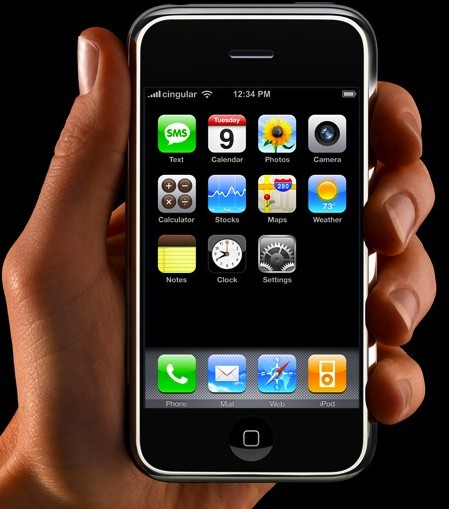
apple-iphone-in-hand.jpg

Wednesday, may 27th

AT&T today explained some of the key details behind a planned upgrade for its 3G network, including improvements to the infrastructure underneath. Having initially run a trial, the carrier now says it plans to start upgrading its network to 7.2Mbps HSPA this year and should have the faster service in place on all its connections by 2011. While actual speeds are likely to be lower, the peak is twice as fast as for the existing 3.6Mbps network.


The update is a prelude to 4G using the Long Term Evolution (LTE) standard, which AT&T reiterated is on track to start testing in 2010 and to go live in 2011.

To support the extra data use, AT&T says it has been and will be upgrading the backhaul, or infrastructure capacity, to support the technology. It has already been adding more support for 850MHz 3G, whose lower frequency has longer range and works better indoors, but now says it has also been adding fiber optic networking and extra capacity to "thousands" of cellular access points to handle the extra load. About 2,100 new cell sites are also going up in existing areas.

AT&T doesn't name the devices it expects to take advantage of the faster 3G but says both add-on modems and smartphones should be available later this year.

The speed and capacity upgrades partly corroborate reports of an iPhone-inspired upgrade to AT&T's network, which may be strained by video uploads made possible through the next-generation iPhone. They also potentially address frequent complaints about an overburdened 3G network that, in key cities like New York and San Francisco, has resulted in frequent dropped calls and 3G data often being slow or simply unavailable.

Multiple rumors have floated that Apple will give the next iPhone a 7.2Mbps 3G chipset from Infineon that will automatically use the added speed when it exists on the local 3G network.


Tags: iPhone, industry, networking, mobile phones, Apple, AT&T, Infineon,

Source: http://www.electronista.com/articles/09/05/27/att.details.7.2mbps.3g/


Posted via web from Global News Feed

Europe's Fastest Supercomputer Unveiled in Germany


Europe's fastest supercomputer unveiled in Germany

 Tue May 26, 2009

BERLIN (AFP) –

A new supercomputer with the power of 50,000 home PCs -- the fastest in Europe and the third worldwide -- was unveiled on Tuesday in Germany.


The "Jugene," capable of 1,000,000,000,000,000 calculations per second, ranks behind the "Roadrunner" and "Jaguar" computers in the United States, said Kosta Schinarakis from the Juelich research centre, where the computer is located.


Jugene will be used for a wide variety of operations, including research on fuel cells for electric cars, weather forecasting and the origins of the universe, the centre said.


The machine is no ordinary PC, requiring 295,000 processors located in 72 lockers each the size of a telephone box.


Tags: IBM, IBM Germany, Supercomputer, Jugene, Roadrunner, Jaguar, Europe's Fastest Supercomputer, 


Source: http://news.yahoo.com/s/afp/20090526/sc_afp/germanysciencecomputer_20090526141800


Posted via web from Global Business News

May 26, 2009

Santander to Pay Madoff Trustee $235m

File:Santander.Banco.Santander.jpg


By Greg Farrell in New York and Victor Mallet in Madrid

Published: May 26 2009


Spain’s Santander, one of Europe’s biggest banks, has reached a settlement with the trustee seeking to recover money for Bernard Madoff’s victims, agreeing to pay $235m to resolve claims against two of the bank’s hedge funds, managed by its Optimal investment arm.


The deal is the first big settlement for Irving Picard, the trustee, in his quest to get investment partners of Mr Madoff to return money they withdrew from his investment business before he confessed to running a “Ponzi scheme”.


In recent weeks, Mr Picard has filed suit against hedge funds and investors who profited from Mr Madoff’s operation, seeking the return of more than $13bn.


Mr Picard said yesterday that the $235m settlement represented 85 per cent of what he was seeking from Santander’s Optimal unit. Once the payment is made, Mr Picard will have collected $1.225bn to be paid out to victims of Mr Madoff’s fraud.


“I am very pleased that we reached such a favourable settlement with Optimal and that Optimal will pay more than $235 million to resolve the claims against it. We hope that other entities against which we have claims will likewise come forward to settle those claims for the benefit of all of Madoff’s victims,” said Mr Picard.


Under US federal and New York law, investors who withdrew principal or profits in the 90 days before Mr Madoff’s December 11 arrest are especially vulnerable to “clawbacks” of the money.


Santander confirmed the settlement and that the 90-day stipulation was a factor. It said it would issue a more detailed statement later.


Santander, the eurozone’s biggest bank, admitted client losses of up to €2.33bn through Optimal funds as a result of the Madoff case. It sent Rodrigo Echenique, a director of the bank and a close associate of Emilio Botín, the chairman, to meet Mr Madoff in New York on November 27, but it has not said whether the bank withdrew funds from Mr Madoff’s business.


Source: http://www.ft.com/cms/s/0/de9b1636-4a0a-11de-8e7e-00144feabdc0,dwp_uuid=e8477cc4-c820-11db-b0dc-000b5df10621.html

Posted via web from Global Business News

The Global CIO 50: IT Leaders Changing the Business World


These leaders and their teams are ready to take on the world -- and the perception that tech's more about cost than innovation.

By Bob Evans - InformationWeek 
May 23, 2009  (From the May 25, 2009 issue) 


This is a fascinating but also precarious time to be a CIO, particularly one with global responsibilities. CIOs are being given more strategic roles than ever before, yet they're simultaneously seeing their budgets cut while expectations remain unrelenting, and of course the global recession only complicates the situation.


CIOs are being asked to drive business change while at the same time many are trying to replace old and inflexible infrastructures with modern and flexible ones. They're being given responsibility for establishing global standards in applications and related processes, but sometimes without the organizational authority to enforce those new standards. And across the globe, CIOs are fighting the stubborn perception that IT in general and CIOs and their teams in particular are cost centers rather than creators of value and accelerators of innovation.


In this best-of-times, worst-of-times scenario, CIOs can find enormous value in seeing how their peers around the world are dealing with these difficult and urgent imperatives. So InformationWeek's Global CIOhas developed a couple of projects to give you some of that global peer-level perspective:


• In the Global CIO 50, we've identified 50 of the top CIOs from around the world and profiled them and the strategic contributions they're making to their companies.


We selected CIOs and their companies based on market leadership, innovative IT-enabled business practices and results, and the achievement and impact of the individual CIOs.


• The Global CIO research report, "Small World, Big Opportunities,"is based on an exclusive, primary-research survey conducted across multiple countries to determine top priorities, approaches, and attitudes for CIOs around the world. We received more than 2,000 completed surveys, but because we wanted to focus on CIO-level reactions, we culled the 861 responses from CIOs and VPs of IT and built our study on their input. The entire study is available for sale here.


Among the key findings from our Global CIO best practices report are the three top priorities cited by CIOs from around the globe: working to spend less money on internal IT issues and more on external, customer-facing projects (our old friend, the 80/20 ratio); developing and refining new ways to capture and communicate the business value of IT efforts and expenses on global projects; and shifting the internal outlooks of worldwide IT organizations to reflect global perspectives rather than domestic ones.


And you'll see those themes reflected in the achievements of the Global CIO 50: UPS CIO Dave Barnes noting that UPS aircraft now fly more miles outside the continental United States than inside; Coca-Cola, recognizing China as its third-largest and perhaps fastest-growing global market, opening a $90 million innovation and technology center in Shanghai; LG Electronics CIO Kim Tae Keuk leading an effort to replace more than 80 different ERP systems around the world with a single, global system capturing 440 business processes; and more.


So please come meet the Global CIO 50. While it's up to you to act locally, we hope this package helps you think globally.


The Global CIO 50

Select a name below to read their profile

Jean-Michel Arès

Coca-Cola

New tools help teams borrow what works

Laxman Badiga

Wipro Technologies

Building IT for scalable software services

Dave Barnes

UPS

Technology is built from the start to be global

David Briskman

Ranbaxy Laboratories

Priorities include speeding products to market

Rob Carter

FedEx (NYSE: FDX)

Standard tech at hubs in China, Germany, U.S.

Gilberto Ceresa

Fiat Group

Digital design-to-production for speed

Laércio Albino Cezar

Banco Bradesco

Testing biometrics on its ATM machines

Ashish Chauhan

Reliance Industries

ERP used across the conglomerate's units

Chen Jinxiong

Fuzhou General Hospital

IT helps serve booming patient demand

Guy Chiarello

JPMorgan Chase

Integration and innovation drive his team's agenda

Sumit Chowdhury

Reliance Communications

Leads the telecom's IT and its IT services arm

Jody Davids

Cardinal Health

IT-driven transformation with customer focus

Dorival Dourado Jr.

Serasa

Data-driven innovation key to credit data growth

Dan Drawbaugh

Univ. of Pittsburgh Medical Center

Defies IT boundaries by driving global expansion

Feng Taichuan

Xian-Janssen Pharmaceutical

Controls cost and risk, making data accessible

Vikas Gadre

Tata Chemicals

Works with groups outside India, especially on ERP

Arun Gupta

Shoppers Stop

Leads IT for retail stores and heads a business unit

Michael Heim

Eli Lilly

R&D portfolio now managed globally, centralized

Mark Hennessy

IBM (NYSE: IBM)

Global IT plan: Simplification before automation

John Hinshaw

Boeing

IT critical to complex global supply chain

Yasuyoshi Katayama

NTT Group

Focused on next-gen networks and new businesses

Kim Tae Keuk

LG Electronics

Business needs process expert, not "technician"

Daniel Lebeau

GlaxoSmithKline Biologicals

Getting vaccine test data out of Africa -- faster

Li Hong

Sinosteel

IT key to move to services and related businesses

Liu Zhixuan

Shenzhen Airlines

Data helps segment customers, offers new services

Alan Matula

Royal Dutch Shell

Innovator in unified communications worldwide

Sunil Mehta

JWT

Brings innovations of global ad company to India

Jai Menon

Bharti Enterprises

IT leader on businesses from wireless to agriculture

Jedey Miranda

Eaton Latin America

IT innovation is part of growth plan

Jonathan Mitchell

Rolls-Royce

CIO and director of business process improvement

Randy Mott

Hewlett-Packard (NYSE:HPQ)

After transformation, pushing to the next level

Tania Nossa

Alcoa Brazil

Network reaches mines in the Amazon (NSDQ:AMZN) forest

Filippo Passerini

Procter & Gamble

IT "consumption reports" saved $3.5 million

Christopher Perretta

State Street

Align IT with customers, not "the business"

Steve Phillips

Avnet

From regional IT teams to a unified, global team

Wilson Maciel Ramos

Gol

Innovation's baked into the tech strategy

J.P. Rangaswami

BT Group

Has brought people in from beyond telecom

Haider Rashid

ABB Group

Driving to make a more simplified organization

Toby Redshaw

Aviva

Web 2.0 push typical of "big and agile" philosophy

Anantha Sayana

Larsen & Toubro

Measures business-IT alignment in each division

Manjit Singh

Chiquita

Bottom-line discipline, SaaS believer

David Smoley

Flextronics

Connecting global supply chains, driving SaaS

Song Shiliang

Giant Interactive Group

Tech is central to online game company's strategy

Ralph Szygenda

General Motors

Rewriting the rule book for outsourcing

Steve Tso

Taiwan Semiconductor

Experience from marketing to R&D to IT

Patrick Vandenberghe

ArcelorMittal

After megamerger, apps need consolidating

Pravir Vohra

ICICI Bank Group

Leading IT and process automation strategy

Wu Dawei

JuneYao Group

Modernized call center, infrastructure, services

Zhang Jun

Li Ning

Retailer integrates design, supply chains, retail

Zheng Jiancheng

Belide Group

Sales data drives short fashion product cycles


Source : http://www.informationweek.com/news/global-cio/interviews/showArticle.jhtml?articleID=217600529&cid=nl_IWK_report_html


Posted via email from Global Business News